
Looking for information but not sure where to start?
At the Science of Reading Center at Possibilities, we deliver 1:1, evidence-based instruction grounded in neuroscience—helping children with dyslexia and learning differences become confident, capable readers.
of poor Grade 1
readers stay behind
without intervention
years of Direct
Instruction research
individualized
sessions, virtual
or in-person
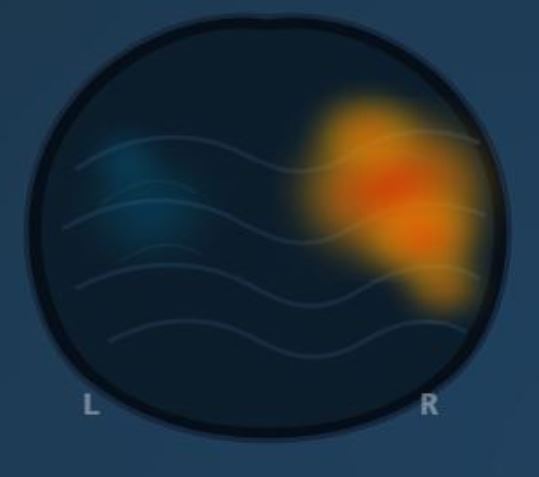
Right hemisphere overactivates
Left reading network underused
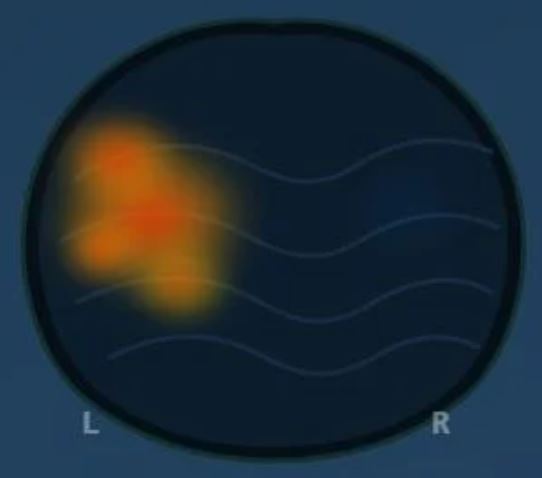
Left network activated & strengthened
Right compensation resolved
🔴 High activation
🟠 Moderate
🟢 Low / baseline
Adapted from: Shaywitz et al. (2002, 2004); Simos et al. (2002).
Illustrative representation of published fMRI findings.
The Science of Reading is grounded in more than 40 years of research on how children learn to read and which teaching methods are most effective. This research draws from neuroscience, psychology, education, and linguistics to better understand how the brain develops reading skills.
For children with dyslexia, the brain processes written language differently, making reading more challenging without explicit, structured instruction. When these difficulties are not addressed early, gaps in reading skills can widen over time. With targeted, evidence-based support, however, children can strengthen foundational reading skills and make meaningful progress.
Unlike spoken language, reading does not develop naturally. The brain must be specifically trained to map print to sound. Without systematic phonics instruction, many children will not develop this skill on their own.
National Reading Panel (2000); Dehaene (2009)Children who fall behind in reading read less, which slows vocabulary and comprehension growth, which widens the gap further. Early structured intervention prevents this cycle from taking hold.
Stanovich (1986), Reading Research Quarterly, 21, 360–407A 2018 meta-analysis of 328 studies spanning 50 years found that Direct Instruction produces consistently positive, statistically significant outcomes — every single study. Effect sizes were moderate to large.
Stockard et al. (2018), Review of Educational Research, 88(4), 479–507Brain imaging studies have helped researchers understand how reading develops in the brain, and how the brain changes with effective instruction.
Skilled reading relies heavily on a network of language regions in the left hemisphere of the brain. In struggling readers and individuals with dyslexia, these left-hemisphere reading pathways are often less active during reading tasks. At the same time, other areas of the brain, including regions in the right hemisphere, work harder to support reading.
Research shows that with structured, evidence-based intervention, activity in the brain’s left-hemisphere reading network can increase as reading skills improve. Over time, readers may rely less on compensatory brain regions and process written language more efficiently.
Many of these brain changes can persist over time, demonstrating that effective instruction can create lasting improvements in how the brain processes reading.
In a landmark MEG study, Simos and colleagues found that after structured phonics intervention, children with reading disabilities not only improved their decoding skills to the average range—their brain activity shifted to match typical readers, with strong left-hemisphere activation.
Simos et al. (2002). Neurology, 58(8), 1203–1213 · Perdue et al. (2022). Neuroscience & Biobehavioral Reviews (39 studies reviewed)

Weak activity in reading areas

Right side compensating — overactive

Left reading circuits now fully active ✓

Right side calmed — no longer compensating
Yellow patches show where the brain is most active. Before intervention, struggling readers show little activity on the left — where the brain’s efficient reading circuits live — but bright patches on the right, where the brain is working hard to compensate. After structured reading instruction, the left side lights up and the right side calms down. These changes are lasting.
Original illustration. Activation patterns based on: Fletcher, Reid Lyon, Fuchs & Barnes (2018) Learning Disabilities, Guilford Press; Shaywitz et al. (2004) Biological Psychiatry; Simos et al. (2002) Neurology.
At the Science of Reading Centre at Possibilities, every child receives 1:1 instruction tailored to their unique reading profile.
We apply structured, evidence-based methods with precision, adapting to how each child’s brain learns best.
Direct Instruction is the backbone of our program—one of the most rigorously researched and proven approaches in education, with decades of success helping struggling readers. Programs like Corrective Reading and Reading Mastery are built on its principles.
Every lesson is structured, sequential, and mastery-based. Nothing is left to chance. Concepts are taught explicitly and practiced until they stick—while students engage actively throughout, supporting efficient, lasting learning.
Layered onto our Direct Instruction foundation, we incorporate Orton-Gillingham–based strategies to reinforce and deepen each student’s learning.
This structured, multi-sensory approach strengthens the letter–sound relationships that underpin fluent reading—helping students build accuracy, confidence, and retention.
You may recognize these methods from programs like Barton Reading & Spelling and Empower Reading. We draw from the same evidence-based tradition, integrating these strategies seamlessly into our 1:1 sessions to amplify results.
We continuously track each student’s progress to ensure instruction is delivering results. If something isn’t working, we adjust—quickly and precisely.
Our approach is data-driven, not assumption-driven, so every decision is grounded in what your child actually needs to move forward.
For families residing in Ontario, there is an option to have reading progress monitored by a Psychologist. For individuals residing outside of Ontario, progress is monitored by our Academic Services Team.
Reading challenges often co-occur with ADHD and other learning differences. That’s why our Academic Services team collaborates closely with the broader Possibilities Clinical Team to ensure every part of your child’s plan is aligned and working together.
The result: more coordinated care—and more meaningful progress.
You may have come across programs like Barton Reading & Spelling, Empower Reading, the Orton-Gillingham approach, and the Lindamood Phoneme Sequencing Program for Reading, Spelling, and Speech. While we don’t deliver these specific programs at Possibilities—using evidence-based programs from the Direct Instruction curriculum as our foundation instead—our Science of Reading Centre is grounded in the same evidence-based principles that make all these programs effective.
What we add is individualized 1:1 instruction from trained specialists, ongoing progress monitoring, and added opportunities for integrated care with our Clinical Team when ADHD or other diagnoses are part of the picture.
That combination—structured, evidence-based instruction plus clinical expertise—is what sets our program apart from home-based programs and school-delivered supports.
of poor Grade 1 readers remain poor readers in Grade 4 without intervention
Juel (1988), Journal of Educational Psychology
studies in the largest Direct Instruction meta-analysis — every single effect was positive
Stockard et al. (2018)
neuroimaging studies confirm brain changes after structured reading intervention
Perdue et al. (2022)
of the population affected by dyslexia — across all intelligence levels
Shaywitz (2003); Int’l Dyslexia Association
A structured path from initial assessment to lasting reading gains. Every step is guided by specialists—nothing is left to chance.
We begin with placement testing to pinpoint your child’s current reading level and identify the most effective starting point. Results are reviewed, and you receive a report with a personalized learning plan.
With the Signature Pathway, you will be invited to a 30-minute meeting with a Registered Psychologist, who will walk you through your child's results, explain the recommended program, and answer your questions. This consultation is not included in the Direct Pathway.
Your child begins 1:1 sessions with a trained Science of Reading instructor—typically twice per week, 50 minutes each. Every session is structured, evidence-based, and precisely paced for maximum progress. On the Signature Pathway, a psychologist monitors reading progress with the Academic Services Team.
After the completion of each 65 lessons, your child is reassessed to ensure skills are fully consolidated before moving forward. Our team reviews progress, shares updates with your family, and refines the plan for the next stage. This cycle continues until your child achieves their reading goals.
No diagnosis required to start. Our Placement Assessment gives us everything we need.
Children with a confirmed diagnosis of dyslexia or a reading-based learning disability.Our structured, evidence-based approach directly targets the decoding difficulties at the core of these challenges.
Children with ADHD who also struggle with reading. Our sessions are structured for engagement—fast-paced, explicit, and highly interactive.
Students who are behind in decoding, fluency, or comprehension—even by a small margin. Small gaps in reading skills can widen over time. Early, targeted intervention helps prevent a minor delay from becoming a larger learning gap.
Children receiving school-based reading support who are not making expected progress. School interventions are often limited in intensity and structure. Our approach provides the frequency, precision, and instruction needed to drive meaningful change.
You don’t need a diagnosis to get started. If something feels off with your child’s reading, we can help. Our Placement Assessment forms the basis of a personalized learning plan.
We support learners from Grade 1 through adolescence, and adults are welcome as well. It is never too late to improve reading skills—but earlier intervention typically leads to stronger, faster outcomes.
Both pathways use the same evidence-based Science of Reading instruction. The difference is the level of clinical oversight built around your child’s sessions. Not sure which is right? We’ll guide you after the Placement Assessment.
Expert 1:1 reading instruction with ongoing progress tracking by your child’s reading instructor throughout the program. Designed for families seeking structured, evidence-based intervention without full-time psychologist involvement.
Everything in the Direct Pathway, with added oversight from a psychologist throughout your child’s program. This is our highest level of clinical support—recommended for children with ADHD, anxiety, co-occurring learning differences, or more complex learning profiles.
No referral required. Provincial health plans such as OHIP do not cover educational treatments. Academic services may be eligible for reimbursement under private benefit plans — please check with your provider.
Brain research is clear: the earlier reading difficulties are identified and addressed, the better the long-term outcomes.
In Grades 1 and 2, children are learning to read. By Grade 3, they are expected to read to learn. When decoding skills are not yet secure at that stage, challenges often extend beyond reading into all academic areas—and tend to grow over time.
Psychologist Dr. Keith Stanovich's research highlights how reading difficulties can compound: children who fall behind tend to read less, which slows vocabulary growth, comprehension, and overall academic development—creating a widening gap that becomes increasingly difficult to close.
At Possibilities, our clinical perspective—grounded in neuropsychiatry and neuropsychology—is that early intervention is critical. When concerns arise, we recommend addressing them promptly rather than waiting for further delay. In many cases, the most effective window for change is before Grade 3. It’s still possible to change brain circuits for reading after that, but don’t delay! Evidence-based intervention will always be more effective when delivered sooner rather than later.
Students can still benefit meaningfully from intervention after Grade 3, and even as adults. More intensive support may be required when difficulties are long-standing, but the brain retains the capacity to change throughout life.
Earlier is better — but later is always better than never.
The window when reading circuits are most plastic and respond fastest to instruction
of poor Grade 1 readers remain poor readers in Grade 4 without intervention (Juel, 1988)
No diagnosis required, no referral needed — you can book a Placement Assessment today
At the Science of Reading Centre at Possibilities, every child receives 1:1 instruction tailored to their unique reading profile. We don’t follow a one-size-fits-all program—we apply structured, evidence-based methods with precision, adapting to how each child’s brain learns best.
No. A diagnosis is not required to begin.
If you have concerns, it’s appropriate to act on them. Our Placement Assessment provides everything we need to design a personalized reading program for your child.
If you’re interested in an evaluation where a formal diagnosis could be made, we also offer comprehensive Psychoeducational and ADHD assessments at Possibilities.
It can be a sign to look more closely.
In early grades—especially Grades 1 and 2—reading instruction focuses on building foundational skills like letter–sound relationships. Consistent Cs at this stage may indicate difficulty developing core sounding-out skills.
In later grades, Cs can reflect challenges with comprehension or keeping up with increasing reading demands.
If you’re unsure, an assessment can clarify whether support is needed. We offer a range of assessments—from a focused Placement Assessment to see where your child might fit into our reading programs, to a more comprehensive assessment like our Signature Psychoeducational + ADHD + Mental Health Assessment to determine whether a Learning Disability is present in reading and other academic areas along with ADHD and/or a men.
Yes, they may still benefit.
Even small gaps in reading skills can widen over time. What seems minor now can become more difficult to address later as reading expectations increase.
Early, targeted support can close gaps relatively quickly—and it’s always easier to address a small challenge before it becomes a larger one.
Current research suggests otherwise.
The earlier reading challenges are addressed, the easier they are to remediate. Delaying support can allow gaps to grow, requiring more intensive intervention later.
If something doesn’t feel right, early action is the best next step.
Often, this is the case.
School-based support can be helpful, but it is frequently limited in intensity and frequency, and the most intensive level of support (Tier 3) is not always available or delivered with the instructional time and structure needed to close significant reading gaps. As a result, some children continue to experience ongoing gaps in reading development—with those gaps widening—even while receiving intervention at school.
Our clinic provides Tier 3 intervention using structured, evidence-based instructional programs delivered in a systematic, explicit format, with ongoing progress monitoring to ensure instruction is effectively addressing student needs and driving measurable growth.
In practice, these terms often refer to overlapping profiles of reading difficulty, but they are not identical.
“Dyslexia” is the term more commonly used in the United States. In Canada, clinicians typically use “Learning Disability in Reading” or “Reading Disorder/Disability.”
Decoding refers specifically to the ability to accurately and efficiently sound out written words using knowledge of letter–sound relationships.
Reading Disabilities are not limited to this skill. They can include decoding challenges as well as difficulties with reading speed and comprehension.
Partly.
We incorporate Orton-Gillingham–based strategies as an important complement, but our core approach is Direct Instruction—one of the most well-researched and effective methods for improving reading outcomes.
This combination allows us to build skills systematically while reinforcing them through multi-sensory techniques—giving students the benefits of both approaches.
If you’re familiar with programs like Corrective Reading, Reading Mastery, Barton, or Empower Reading, you’ve already seen the evidence-based foundations our work draws from.
General “brain training” programs that target skills like attention, memory, or processing speed are not a focus of our approach, and current research shows limited impact on reading outcomes.
What brain science does show is this: reading improves through targeted reading practice. Spelling improves through targeted spelling practice.
That’s why our programs focus directly on building the specific skills required for reading—using structured, evidence-based instruction that leads to meaningful, lasting progress.
Yes—absolutely.
Children with ADHD are welcome and can make meaningful progress. Our evidence-based approach is designed for engagement, with fast-paced, interactive sessions that keep students actively involved.
Research shows that integrated support leads to the best outcomes for students with ADHD who are receiving evidence-based reading intervention. When appropriate, we coordinate with our broader Clinical Team to ensure your child’s learning and attention are aligned.
Evidence-based reading instruction is fundamentally different from general tutoring.
It is explicit, systematic, and targeted, focused directly on the skills and brain processes involved in learning to read, especially decoding.
While general tutoring can be helpful for practice or homework support, it often lacks the structure and intensity needed to reduce reading gaps. In contrast, approaches like Direct Instruction are designed to produce measurable, lasting progress.
Our program delivers this level of instruction with the frequency, precision, and consistency required to create real change.
Yes.
You can enrol in our Academic Services regardless of where your psychoeducational assessment was completed.
We will review your child’s existing report as part of developing a personalized Treatment Plan.
Our reading programs begin at age 6 (Grade 1).
We also support older students and adults—because it’s never too late to improve reading skills through structured, evidence-based instruction.
Yes.
Sessions are available via secure video for families across Canada and the United States. Our central office is located in Toronto, Ontario.
No referral is required to get started.
No.
You do not need a referral to access our Science of Reading Centre.
Reading difficulties don’t resolve on their own — but with the right support, real and lasting change is possible.
The best time to start is now.
possibilitiesclinic.com · Ontario, Canada · Virtual sessions available across Canada and the United States