
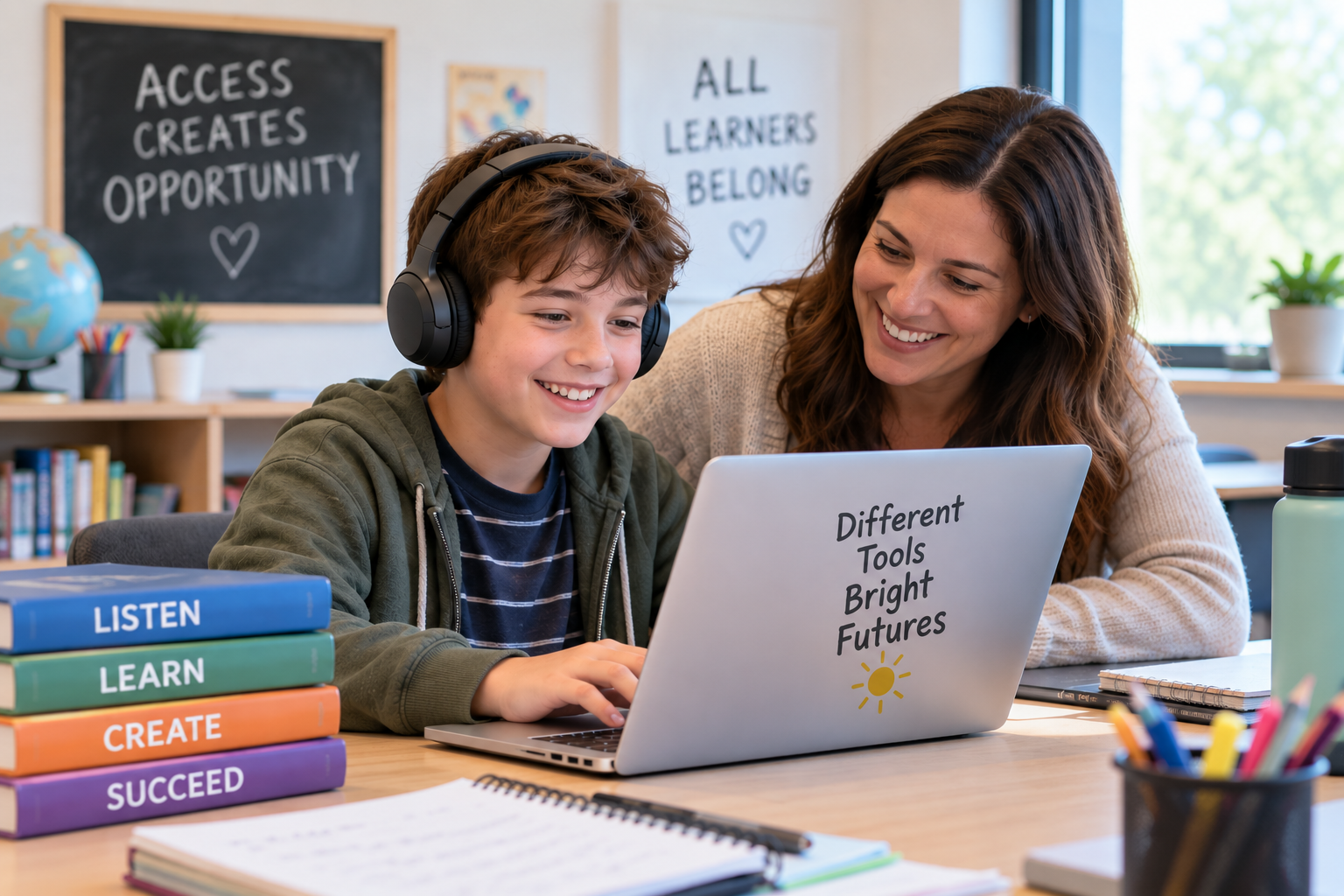

Does your child know the answer but can’t transfer their thoughts into writing? That gap between what a child knows and what they can show is exactly what assistive technology (AT) is built to close. Some parents worry AT is a shortcut, but it isn’t. It’s a compensatory strategy: a way for your child to access the curriculum and demonstrate their full potential while continuing the skill-building work that helps them grow.

What Is Assistive Technology?
- Any device, tool, or system that helps a child bypass, work around, or compensate for a specific learning difficulty. It doesn’t cure the difficulty; it works around it.
- Example: a child who struggles with reading but has strong listening skills can use audiobooks to access the same material as classmates.
- It’s not a replacement for remediation. AT doesn’t teach a child to read, spell, or compute. Remediation builds the skill; AT provides access in the meantime, and kids benefit most when both happen together.
- It also builds independence, letting kids succeed on their own instead of relying on others for help.
How AT Supports the Whole Child
Beyond specific academic tasks, AT plays a broader role in a child’s school experience:
- Helpful tools. Gives kids the tools to do more on their own, whether that’s completing an assignment, following a class discussion, or managing their day.
- Self-esteem. Lets kids engage with schoolwork on their own terms, which builds confidence instead of the frustration and self-doubt that often comes from struggling silently.
- Access to curriculum. Helps kids participate in classroom activities and work toward the same academic goals as their peers.
- Removing barriers. Clears the way for a child to show what they know and can do, rather than being held back by a specific skill deficit.
Together, these are what make AT more than just a school accommodation. It supports how a child sees themselves as a learner.
A Note of Balance
AT is a compensatory strategy, not a substitute for remediation. It gives kids access to the curriculum and a way to show their full potential today, while ongoing, targeted instruction continues building their underlying skills for tomorrow. One doesn’t replace the other. They work as a team.
- It’s worth knowing that AT is considered an accommodation, not a modification. That means your child keeps working at grade level. They’re just getting the support they need to get there, not being shifted to easier, below grade level work.
- And it’s not “unfair” if not every student uses it. Some kids need glasses; some don’t. The same logic applies to AT. Giving a child the support they need to work at the same level as their peers isn’t giving them an advantage; it’s leveling the playing field.
The Bottom Line
Giving a child the right assistive technology isn’t lowering expectations. It’s removing a barrier that was never about how smart or capable they are. Every child deserves the chance to show what they know.
When Your Child Needs Help Getting Started with AT
Having the right tool is only half of the battle. Kids often avoid using AT simply because they don’t know how, don’t see the benefit yet, or don’t want to feel “different” from their classmates. This is a real and common barrier, and it’s where one-on-one support can make all the difference.
If your child could benefit from hands-on guidance while learning to use assistive technology confidently and consistently, Assistive Technology Coaching at The Possibilities Clinic offers one-to-one coaching with a Teacher-Psychologist team, helping students build comfort with the right tools while working through real schoolwork.